Thursday, July 17, 2008

And so it begins...

From the Citizen's Voice

Take this with a grain of salt. This is only the recommendation of the cluster groups. The Secular media of course, had to sensationalize what is happening. This is only phase three out of eight.

Who made these recommendations? YOUR fellow parishoners. Not the Bishop, not the planning committee.

The parishoners.

Remember that.

In three years, there could be half as many churches in the southern region of the Diocese of Scranton, which makes up most of Luzerne County.

The preliminary recommendations from the diocese are out, and if there are no changes, the southern region will go from having 72 parishes to 33 parishes three years after the plan goes into effect.

Diocese spokesman Bill Genello stressed these are preliminary and subject to change before the final approval. The dioceses had no comment on specific recommendations.

The recommendations include consolidating 59 of the parishes down to 22 within three years and sharing programs, staff and pastors at other locations. Where churches are combined, particularly in rural areas, the recommendations do provide for occasional services at locations other than main parishes.

Possible changes include consolidating the six Nanticoke parishes into one at the location of Holy Trinity Church. The 19 churches in Wilkes-Barre and Wilkes-Barre Township could be consolidated into seven.

In Exeter, the three churches of St. Cecilia, St. John the Baptist and St. Anthony of Padua are recommended to consolidate into one at St. Anthony of Padua. The recommendation was not a surprise, said the Rev. Joseph Sibilano, pastor at St. Anthony of Padua, as that was the cluster’s original recommendation to the diocese.

“I believe the people here in the parish will accept this very easily,” he said. “The people were expecting something like this. It will take time, doesn’t take a month. They suggest

three years to do this.”

The Diocese of Scranton is struggling with a decreasing number pastors as more people are getting older and retiring and fewer people are joining.

“I believe that most of the people in the diocese recognize the need for changes and we can’t just continue the way we were,” said attorney Carl Frank, chairman of the core committee at St. Nicholas Church in Wilkes-Barre.

“And in the end, we’re all Catholic Christians and we have to recognize that is our identity in the spiritual realm. That should come first and the place we go to church should come second, in my opinion.”

These preliminary recommendations from the diocese are based on recommendations from core cluster groups, which are made up of church leaders from parishes in a geographical area. Each cluster includes three to seven churches.

The clusters will now gather feedback from the community and respond to the diocese by October. A final recommendation will then be made to Bishop Joseph Martino, who will announce the final plans early in 2009. They will begin going into effect by July 2009.

“I think the thing we have to remind everyone of is these are preliminary recommendations, this is not the final plan,” Genello said. “Over the course of the next two months, we are going to be engaged in discussions about these. These discussions are to include entire parish communities.”

The diocese will post the recommendations online on Friday on its Web site. Announcement Week will begin July 26 and 27, and pastors will start talking to parishioners about the recommendations at services. Pastors and cluster groups will set meetings and times for parishioners to discuss the recommendations.

Wednesday, July 16, 2008

4 down. 2 to go.

Well, if you go to one of the following Churches in Wilkes-Barre:

Cluster 3 —
Holy Trinity, Wilkes-Barre
Holy Rosary, Wilkes-Barre
Maternity BVM, Wilkes-Barre
St. Patrick, Wilkes-Barre
St. Boniface, Wilkes-Barre
St. Joseph, Wilkes-Barre Township

I can tell you the recommendations of the cluster team to the diocese.

They recommended the closing of St. Boniface (I told you so), Maternity, Holy Rosary, & Holy Trinity. Sad about Holy Trinity, it is a beautiful church with a gorgeous high altar that dwarfs most of them in the area. Go see it before it is shuttered up if you care anything for grand church architecture.

St. Patrick's will remain open as will St. Joseph's. If someone from the cluster can further elaborate, that would be great.

Interesting that the clusters, made up of parishoners, called for the closings of these churches.

We'll see what happens next the weekend of July 26-27, "Announcement Weekend" as the Diocese has named it. In that weekend's bulletin pastors will unveil what YOUR fellow parishoners have recommended about YOUR church.

Now don't forget, Diocese officials work from what YOUR parishoners told them. So when they close YOUR church, talk to YOUR fellow parishoner that served on the cluster.

Should make for a fun time.

Sodom and Gomorrah rule in San Francisco

Thanks to Father Z for this update. As he said "Another step towards what we know must eventually come."
FAITH UNDER FIRE
Major U.S. city officially condemns Catholic Church
Instructs members to defy ‘Holy Office of Inquisition’

Posted: July 15, 2008


A San Francisco city and county board resolution that officially labeled the Catholic church’s moral teachings on homosexuality as "insulting to all San Franciscans," "hateful," "defamatory," "insensitive" and "ignorant" will be challenged tomorrow in court for violating the Constitution’s prohibition of government hostility toward religion.

Resolution 168-08, passed unanimously by the City and County of San Francisco Board of Supervisors two years ago, also accused the Vatican of being a "foreign country" meddling with and attempting to "negatively influence (San Francisco’s) existing and established customs."

It said of the church’s teaching on homosexuality, "Such hateful and discriminatory rhetoric is both insulting and callous, and shows a level of insensitivity and ignorance which has seldom been encountered by this Board of Supervisors."

As WND reported, Resolution 168-08 was an official response to the Catholic Church’s ban on adoption placements into homosexual couple households, issued by Cardinal William Levada of the Congregation for the Doctrine of the Faith at the Vatican.

The board’s resolution urged the city’s local archbishop and the Catholic Charities of the Archdiocese of San Francisco to defy the Vatican’s instructions, concluding with a spiteful reminder that the church authority that issued the ban was known 100 years ago as "The Holy Office of the Inquisition."

The resolution also took a shot at Levada, the former archbishop of San Francisco, saying, "Cardinal Levada is a decidedly unqualified representative of his former home city, and of the people of San Francisco and the values they hold dear."

The anti-Catholic diatribe had been challenged in U.S. District Court on similar grounds, but District Judge Marilyn Hall Patel ruled in favor of the city, saying, in essence, the church started it.

She wrote in her decision, "The Congregation of the Doctrine of the Faith provoked this debate, indeed may have invited entanglement" for instructing Catholic politicians on how to vote. This court does not find that our case law requires political bodies to remain silent in the face of provocation."

She ruled that the city’s proclamation was not entangling the government in church affairs, since the resolution was a non-binding, non-regulatory announcement.

Since no law was enacted, she ruled, city officials – even in their official capacity as representatives of the government – can say what they want.

"It is merely the exercise of free speech rights by duly elected office holders," she wrote. [Ohhhh… I think it’s a little more than that now.]

Richard Thompson, president and chief counsel of the Thomas More Law Center, which is appealing the District Court decision on behalf of the Catholic League for Religious and Civil Rights and two Catholic residents of San Francisco, disagrees with Patel’s decision.

"Sadly, the ruling itself clearly exhibited hostility toward the Catholic Church," he said in a statement. "The judge in her written decision held that the Church ‘provoked the debate’ by publicly expressing its moral teaching, and that by passing the resolution the City responded ‘responsibly’ to all of the ‘terrible’ things the Church was saying." [You wouldn’t want the Church to have free speech.]

Thomas More attorney Robert Muise will present oral arguments in the case tomorrow morning in the Ninth Circuit Court of Appeals. [Imagine. The 9th Circuit. What a joke.]

"Our Constitution plainly forbids hostility toward any religion, including the Catholic faith," he said.

"In total disregard for the Constitution, homosexual activists in positions of authority in San Francisco have abused their authority as government officials and misused the instruments of the government to attack the Catholic Church. Their egregious abuse of power has now the backing of a lower federal court. … Unfortunately, all too often we see a double standard being applied in Establishment Clause cases," Muise said.

Thomas More attorneys argued in the District Court case that the "anti-Catholic resolution sends a clear message" that Catholics are "outsiders, not full members of the political community." [That’s it.]

The cultural, and now political, straight-arm to adherents of the Christian faith in San Francisco has been increasingly public in the last two years. Just one week after the anti-Catholic resolution was passed, the San Francisco Board issued a similar resolution against a mostly evangelical group.

Following a gathering of 25,000 teens at San Francisco’s AT&T Park as part of Ron Luce’s Teen Mania "Battle Cry for a Generation" rally against the sexualization of America’s youth culture by advertisers and media, the board spoke out formally again.

According to the San Francisco Chronicle, the Board of Supervisors unanimously passed a resolution condemning the "act of provocation" by what it termed an "anti-gay," "anti-choice" organization that aimed to "negatively influence the politics of America’s most tolerant and progressive city."

Openly homosexual California Assemblyman Mark Leno told protesters of the teen rally that though such religious people may be few, "they’re loud, they’re obnoxious, they’re disgusting, and they should get out of San Francisco." [Nice! They should also rename the city, to get rid of the last taint of Christianity. Then we can put up a wall.]

The Chronicle also reported a San Francisco protester against the evangelical youth rally carried a sign that may sum up the sentiment: "I moved here to get away from people like you."

The Thomas More Law Center hopes the Ninth Circuit Court of Appeals will decide in the case of Resolution 1680-08 that even if a large portion of the community is at odds with a religion’s views on homosexuality, the government cannot be used as a weapon to condemn religious faith. [Just watch.]

Currently, as WND has reported, Colorado and Michigan are tackling the question of whether the Bible itself can be vilified as "hate speech" for it’s condemnation of homosexuality, and Canada has developed human rights commissions, which have decided people cannot express opposition to homosexuality without fear of government reprisal.

Tuesday, July 15, 2008

Deal with the Devil


From New York Post

By JEANE MacINTOSH and KATI CORNELL

A New Jersey bishop who spent five years in Rome under Pope John Paul II sold his beach house to Raffaello Follieri last year, even as the accused con man's alleged scheme to steal millions of dollars from investors began to unravel.

Bishop Joseph Galante, a former undersecretary at the Vatican and current head of the Camden Diocese, pocketed $400,000 for his four-bedroom townhouse in North Wildwood, NJ, in the sale to Follieri in February 2007, The Post has learned.

Last week, the property changed hands again, as the now-jailed Follieri, scrambling to raise the $21 million necessary to free him on bail on federal fraud and money-laundering charges, resold the house for an unknown sum.

But Galante and Follieri had more in common than a beach getaway: Both were keenly interested in the sale of church property.

Follieri is accused of exaggerating his ties to the Vatican in a scheme to fool investors into thinking he had first dibs on buying shuttered properties.

The feds claim Follieri went so far as to pay two monsignors to accompany him on business trips and used his ill-gotten gains to fuel a jet-set lifestyle and lavish gifts on his then-girlfriend, actress Anne Hathaway.

Meanwhile, Galante has actively pushed a controversial plan to close half the churches and schools in the Camden Diocese since his arrival in 2004 and personally introduced Follieri to several parish priests, sources said.

Galante also controls the Atlantic City parish where one of the two priests referred to in the criminal complaint against Follieri, Monsignor William Hodge, is based.

Spokesman Andrew Walton said Galante initially met with Follieri at the encouragement of the Vatican and had no idea he was dealing with a con man until two months after he finalized the sale of his beach house.

Walton said the diocese "got a phone call from an office of the Vatican through the bishop's office and we were asked to be open to dealing with the Follieri Group. We and other dioceses were encouraged to use Follieri where we could."

He added that parishes own their own properties and any sale would benefit them, not the diocese.

"We were certainly open to hearing from Mr. Follieri. We were led to believe the group was legitimate," Walton said, adding that the diocese learned of Follieri's legal woes in May 2007 when he was sued by his former business partner, billionaire Ron Burkle.

The federal complaint unsealed at the time of Follieri's arrest June 24 closely mirrors the Burkle lawsuit, which accuses Follieri of using money from their joint venture to pay for personal extravagances.

A Return to Tradition in Australia

From Inside the Vatican

At a press conference this morning, Cardinal George Pell of Sydney in answer to a question from Andrew Rabel, an Inside the Vatican magazine journalist, indicated that at the final WYD Mass at Randwick Racecourse on Sunday, in line with older practices that have been used in the Vatican and inside Italy in recent months, communion will most likely be received by those kneeling, from the Pope.


Australia will be the first place in the world where these changed customs will be used in a papal liturgy, outside of the diaspora. This was first introduced on the feast of Corpus Christi in Rome, where a select group of worshippers received Holy Communion kneeling and on the tongue, from Pope Benedict, and was continued outside of the Vatican as well, when the Holy Father visited Brindisi in June.

Australia is a country well known for lax liturgical practices following in the wake of the reforms of the Second Vatican Council, and this was particularly evident during liturgies celebrated by John Paul II on visits there in 1986 and 1995.

After criticism of liturgical music at a recent Mass celebrated by Pope Benedict in Washington DC, there was much debate over whether in spite of an evident return to older customs in the Holy See, whether liturgical committees would follow a similar pattern in a country like Australia, when the Holy Father visits.

When the news emerged of the older postures to be employed in papal liturgies, Fr Peter Williams, WYD08 Liturgical Coordinator was vague about whether this would happen in Australia, and indicated that the matter was not raised during the visit of Msgr Guido Marini, Papal Master of Liturgical Ceremonies to Sydney in June. (Marini had indicated this was to be the new custom in an interview in L’Osservatore Romano in the edition of June 25). Fr Williams said, "We are still liaising with Rome as to what should happen here".

According to an anonymous Italian journalist, Msgr Marini was disappointed at some of the liturgical preparations for the final Mass, expected to attract crowds roughly estimated at half a million. The journalist confirmed Cardinal Pell’s expectation, that communion would be distributed in the traditional manner by the Holy Father.

In 2001, the final book published by Cardinal Ratzinger before his election as pope, was a work devoted to an analysis of the fruits of the liturgical reform titled, "An Introduction to the Spirit of the Liturgy". It indicated that some of the innovations dear to the heart of John Paul II (like the celebration of Masses in an amphitheatre on papal visits in other countries) were a challenge to maintain the sense of the sacred.

By bringing back traditional postures in the reception of Holy Communion when the Pope celebrates Mass, (among other things) he is hoping to bring back to the faithful this sense of sacredness in divine worship, to be followed by all.


Andrew Rabel, an Australian journalist, is covering the Pope's trip to Australia.

Monday, July 14, 2008

Bill Genello, email me back!!

“Called to Holiness and Mission”.

What is it?

The Diocese has spent a lot of time prepping us for the church closings that have happened, and which are on the way early next year with the use of the snappy name “Called to Holiness and Mission” and by telling us about the “new evangelization” that is coming.

Huh?

Closing our churches is holy? Maybe it’s a mission that Bishop Martino finds himself firmly in the midst of, but for me, the churchgoer, I want out.

Sounds more like self mutilation than renewal.

How does closing these churches lead to anything other than bitterness and dissention?

What is “Called to Holiness and Mission”? It was something written about by Pope John Paul II, the only Pope the church has ever had by the way, in his 1990 encyclical Redemptoris Missio about the validity of the permanent missionary status of the church. In it he speaks about the Pontifical Mission Societies, The New Springtime of the Gospel, and about becoming “true” missionaries. What appears to be the bishop’s final phase of CTHAM, is the “new evangelization”.

Does anyone know what this “new evangelization” is?

Me neither.

I have spent some time trying to contact Bill Genello, the diocesan spokesman, but no luck so far. If you read this, Bill Genello, call me or email me back. The people of the Diocese have some questions.

Today I discovered an email for the CTHAM department. I will email them there and see what I can find out for you all.

From Goose Creek to ROME!

Ha! Someone from ROME, Italy was checking out my blog.

From my stats:

United States Goose Creek, South Carolina
United States San Francisco, California
Italy Rome, Lazio
United States Ramsey, New Jersey
United States Narberth, Pennsylvania

I'm certain it was the Pope.

Foul is fair

Death Wish:
The Impending Suicide of a once great Nation
By Father John Corapi SOLT

A large number of endangered, unwanted, and unborn children held a town hall meeting
on the 4th of July--alarmed at the brutal and untimely killing of millions of their brothers and sisters in recent years. That the murderous war waged on them had the full force and respectability of the law made their plight all the more terrifying.

Their complaint was humble and it was simple. They were not distressed by rising gas
prices, or the deteriorating economy in general. They were not even frightened by the
exponential increase of natural disasters. The threat of global warming or global terrorism did not greatly disturb them.

They had become an endangered species, and little had been done to answer their
terrified and silent screams from the womb. They decided that the barbaric treatment that they and their fellow unwanted unborn human beings have had to endure for perilous decades was unconscionable and unbearable. They cried out to their Creator for inspiration and protection, and then unanimously they put forth a declaration. It began as follows:

“When in the course of human events it becomes necessary for one people to dissolve the political bands which have connected them with another and to assume among the
powers of the earth, the separate and equal station to which the Laws of Nature and of Nature’s God entitle them, a decent respect to the opinions of mankind requires that they should declare the causes which impel them to the separation.

WE HOLD THESE TRUTHS TO BE SELF-EVIDENT, THAT ALL MEN ARE
CREATED EQUAL, THAT THEY ARE ENDOWED BY THEIR CREATOR WITH
CERTAIN UNALIENABLE RIGHTS, THAT AMONG THESE ARE LIFE, LIBERTY
AND THE PURSUIT OF HAPPINESS….”

THAT AMONG THESE IS LIFE; THAT AMONG THESE IS LIFE; THAT AMONG
THESE IS LIFE!

The first and pre-eminent right is the right to life. This truth the Founding Fathers were sure of, and anyone with any common sense at all is equally sure of it. 232 years after the Declaration of Independence was signed the amount of common sense that seems to be operative in many spheres of influence—most notably the courts and the political arena--can easily be poured into a very small thimble.

The United States of America seems to have a death wish, and we have traveled far down the road to having that wish realized.

When law divorces itself from common sense and spawns the illegitimate offspring of
distortions of law, resulting in illegal laws—based neither on the natural law nor divine law--this undermines law itself, generating disdain for the law. Erosion of trust in the courts, or the system in general, is inevitable.

The genesis of the death wish is rooted in the fall of man that we see in the Book of
Genesis. The substance of the fall is wrapped up in Lucifer’s pride, transferred to Adam and Eve—“You can be like gods, knowing good and evil.” The unholy, yet inevitable, consequence of that pride is disobedience—eating the forbidden fruit. The ultimate end is death, as God said it would be. That’s the way it was in the beginning. That’s the way it is now. That’s the way it will be until time breathes forth it’s last moment.

The prototypical sin is pride, the pride that seeks to exalt the creature above the Creator: “I can be like God.” Then, subjectively and arbitrarily, man tries to assert himself, imagining that he knows what’s good and evil for himself without reference to God and God’s law. This was the fall of the angels and the fall of man. The attempt by creatures to usurp what is only the province of God. Only God knows what is good for His creation. In recent years it took the form of a self-inflicted heart wound when some dissident Catholics rejected the teaching of the Church, a teaching that clearly held that artificial contraception is intrinsically evil. Then, as Pope Paul VI had warned, it metastasized into abortion. From abortion it degenerated even further into partial-birth abortion. It was then a short and easy step to infanticide.

The exclamation point at the end of the death wish is that now there is yet another
candidate for the office of president of the United States who has in an extraordinary way done everything possible to breathe life into all of the barbaric elements of the death wish. He and his party make no apologies for their support of abortion, partial-birth abortion, and even infanticide. It’s hard to believe that we have degenerated to the point that we’ll murder a helpless baby should it escape the violence of an abortion and be born alive. Can a Catholic vote for such persons? We are told, “yes” for a “proportionate reason.” What, I might ask, is the proportionate reason so weighty as to excuse supporting those responsible for what is tantamount to genocide?

The judges and politicians that support such barbaric practices are truly guilty of
genocide: genocide—the deliberate and systematic destruction of an ethnic, racial,
religious, national, or social group. “What is the group so targeted?” you might ask. The group is unwanted, unborn children--tens of millions of them.

The Supreme Court justices that gave us Roe v. Wade will have to plead temporary
insanity in the court of history. There will be no defense in the highest Court that is the judgment seat of almighty God if they do not repent of the incalculable evil they have wrought.

Yet, despite the life and death importance of this travesty of authentic law, there will be no serious discussion among political candidates, or anyone else. It is as if society has been bewitched, blind to the splendor of truth, deaf to the cries of the most innocent, most vulnerable, and most utterly helpless.

From artificial contraception to abortion to partial-birth abortion, then on to infanticide we march toward the abyss of oblivion, a society marked for death. Is it any wonder we can rationalize the killing of the elderly or the sick through euthanasia? The tragic murder of Terri Schiavo is a logical extension of a morally numb society’s mad march toward its own suicidal death. She wasn’t sick. She wasn’t dying. They murdered her, starved her to death--one of the cruelest forms of death. She was innocent, yet subjected to a most cruel and unusual punishment. Why? Because she was helpless? Because she was too much trouble, too hard to look at?

As Abraham Lincoln asserted, “If destruction be our lot, we must ourselves be its author and finisher. As a nation of freemen, we must live through all time, or die by suicide.” We are dying by suicide, moral and spiritual suicide, and the moral demise of a nation almost always precedes the ultimate demise of a nation.

Many of our leaders, political and legal, are reminiscent of the horrid witches in Act 1 Scene 1 of Shakespeare’s “Macbeth,” chanting shrilly to a morally sick public all too eager to be confirmed in their sins,

“Fair is foul, and foul is fair: Hover through the fog and filthy air.”

Good is evil, and evil is good. The truth is a lie and lies are the truth, hover through the fog of moral relativism and the filthy air of a world gone mad with the madness of sin. The words of the prophet thunder through the ages, “ Woe to those who call evil good and good evil, who put darkness for light and light for darkness” (Isaiah 5:20).

We have inverted the poles of the moral power grid. We have begun to call the negative pole the positive, and the positive the negative. This inversion of reality begets disaster: The power fails, the lights go out, darkness falls—and indeed, if your light is darkness, how deep, how very deep will the darkness be! (cf. Mt 6:23).

This death wish has marched toward its logical and inexorable conclusion
with little opposition from leaders--political, legal, or religious. The world knows the Catholic Church and any self-respecting and faithful Christian roundly reject abortion and all of the other nails in the coffin of contemporary society, but the defense of life has been weak. Weak leadership, whether in society in general, or in the Church in particular, is punishment for sin. The Old Covenant has examples enough of the Chosen People being turned over to exile and their enemies because of infidelity. They lamented, “We have no priest, prophet, or king.” These were taken away because of infidelity. In recent times large numbers of Catholics and other Christians rejected Pope Paul VI’s landmark and prophetic encyclical Humanae Vitae, on Human Life. A majority of the bishops of Canada did so publicly, formally, and in writing with their infamous Winnipeg Statement.

The great Archbishop Fulton Sheen lamented bitterly in the 1970s that the prophetic
spirit of Christ had all but been extinguished in the contemporary Church. Today there are many CEOs, all too few Apostles. Are we afraid of a fight? Do we fear rejection, misunderstanding, or derision? Are we cowed and intimidated by fallacious notions of the separation of Church and state? Could we be afraid of persecution? Could we be afraid of losing our tax-exempt status? Have we declared détente with evil?

The clock is ticking. Midnight is approaching. Time is running out for our nation, a
nation that once was great, and could be great again if enough of us wake up and
renounce this curse of a death wish. Will God turn his friends over to His enemies as He has done multiple times in the past? Will radical Islam overrun us? Will the planet cook? Will one too many natural disasters grind us into dust? Will we collapse economically? All of the above? Perhaps these are all merely effects of the underlying cause—a death wish that chokes the life out of us.

In the end it is likely that President Abraham Lincoln had it right: “Intoxicated with unbroken success, we have become too self-sufficient to feel the necessity of redeeming and preserving grace, too proud to pray to the God that made us.” Thus forgetting that we are one nation under God, we become a nation gone under (President Ronald Reagan).

And, indeed, “If destruction be our lot we ourselves will be its author and finisher. As a nation of freemen we must live through all time, or die by suicide.”

May God grant us the grace to awake from this deadly moral slumber, renounce the death wish, and live like truly free men and women—in the glorious freedom of the children of God.

Rev John Corapi, SOLT-2008

Saturday, July 12, 2008

NO! NO! NO! Is that definitive enough for you, ladies?

Funny how things happen. Just within the last few days some folks over at this liberal catholic blog that I love to irritate had a discussion how women will be priests and deacons soon. I can't wait to post this for them!

‘No’ to women priests is definitive, Vatican consultor says


NOTE: The issue of women’s ordination is again generating headlines, in part due to a recent decision of the Anglican synod in England to open the door to female bishops, in part due to a disciplinary action in St. Louis against a religious sister who attended a women’s ordination ceremony. The July 11 issue of L’Avvenire, the official newspaper of the Italian bishops’ conference, featured an interview on the issue with Monsignor Antonio Miralles, a consultor to the Vatican’s doctrinal office. The interview was conducted by Italian journalist Gianni Cardinale. The full text appears below in an NCR translation.

By GIANNI CARDINALE
Rome

The decision of the Anglican Synod of England to open the door to the nomination of female bishops has generated ample media coverage. On the subject of why the Catholic church admits only men to the priesthood, Avvenire put certain questions to Monsignor Antonio Miralles, of the clergy of Opus Dei, and an ordinary professor of sacramental theology at the Pontifical University of the Holy Cross. A Spaniard from Salamanca who has spent 47 years in Rome, Miralles is a consultor of the Congregation for the Clergy and, since 1990, of the Congregation for the Doctrine of the Faith.

Monsignor Miralles, why does the Catholic church not admit women to the priesthood?

In 1975, the Archbishop of Canterbury at the time, Donald Coggan, informed Pope Paul VI that the Anglicans were on the verge of admitting women to the priesthood, which they later did. Pope Montini wrote him a letter to explain that the Catholic church does not feel authorized to do the same, because it is constrained by the choice made by Jesus, the Lord, to choose only men as his apostles. In that context, the pope asked the Congregation for the Doctrine of the Faith to prepare a document that provided the reasons for this position, which was how the declaration Inter insigniores, published in 1976, was born. In it, the argument given by Paul VI is explained more fully. In May 1994, this position was confirmed in a definitive way with the apostolic letter of Pope John Paul II, Ordinatio sacredotalis.

But some object that the choice of Jesus may have been determined by the historical context, the mentality of the epoch.

It’s an objection that does not have any foundation. Jesus demonstrated that he felt free from the conditioning of the society in which he was born. He demonstrated this freedom, to take just one example, when he opposed the custom of Jewish society of his day, as well as of Greco-Roman society, permitting men to repudiate their wives … in other words, divorce. Certainly, women were among the most faithful followers of Jesus, beginning with his mother, the Blessed Virgin Mary – at the foot of the Cross there were several women, but only one disciple! Nevertheless, Jesus deliberately and freely chose only men as his apostles. This choice cannot be anything but binding for the community that wants to be his church.

Why did Jesus make this choice?

Theologians try to answer this question, which is their duty. But all the explanations that can be given in response to this question always remain secondary with respect to the choice itself made by Jesus, which the church must follow. The church can’t change that choice to suit its own tastes, or on the basis of the desires of sectors of public opinion, however large they may be.

Isn’t the exclusion of women from the priesthood an offense against their dignity?

The dignity of women in the church certainly does not depend upon access to the priesthood. The history of the church, from the Blessed Virgin Mary to so many saints and beatified women, makes the point.

Why did the magisterium wait until 1975 to solemnly proclaim that women cannot be admitted to the priesthood?

Simply because prior to that moment, the fact that the priesthood is reserved to men was an uninterrupted praxis that had not been placed into discussion for almost 2,000 years, not even when the church began to expand in cultural and religious contexts where there were already forms of female ‘priesthood’ (I’m thinking, for example, about the Greco-Roman world), and not even in the face of vocational scarcity or a shortage of clergy. The magisterium normally does not intervene to resolve a dispute when a given truth is peacefully accepted and not under discussion.

Is it possible that in the future the Catholic magisterium, having reflected more on the question, could arrive at a different conclusion and thereby open the door to women’s ordination?

This possibility is excluded. That’s because the all-male priesthood is a truth considered part of the inviolable deposit of faith – in other words, it belongs to Tradition with a capital “T”. The Congregation for the Doctrine of the Faith underscored the point in a formal way with its document ‘Response to a doubt concerning the doctrine of the Apostolic Letter Ordinatio sacerdotalis’ published in October 1995, with the approval and at the request of Pope John Paul II. Some Catholic authors have insinuated that the ‘no’ to women’s ordination should be considered provisional and open to future reconsideration, but in fact that’s not how things are.

Monsignor Miralles, will the decision of the Anglican Synod to admit women to the episcopacy further distance it from the Catholic church??

Relatively. The dramatic rupture occurred with the Anglican decision to admit women to the priesthood. The choice to admit them also to the episcopacy is, in itself, a secondary consequence, which cannot help but worsen a situation that has already deteriorated.

A final ‘secondary’ question. What’s the status quaestionis on the issue of the ordination of women to the diaconate?

On this issue, there has not yet been a pronouncement from the magisterium as there has been on women priests. The current norms, however, and ecclesiastical practice restrict the diaconate to men. It’s true that in the early centuries of Christianity there were references to ‘deaconesses,’ but it would seem that they were not simply a female equivalent of male ‘deacons.’ For now, the permanent diaconate is restricted to men, but the question is still under study.

Friday, July 11, 2008

What do YOU think?

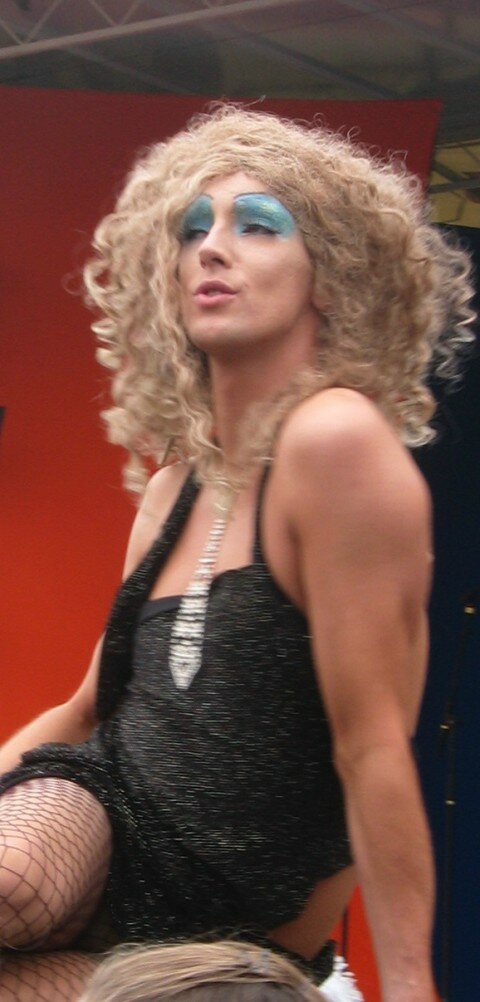
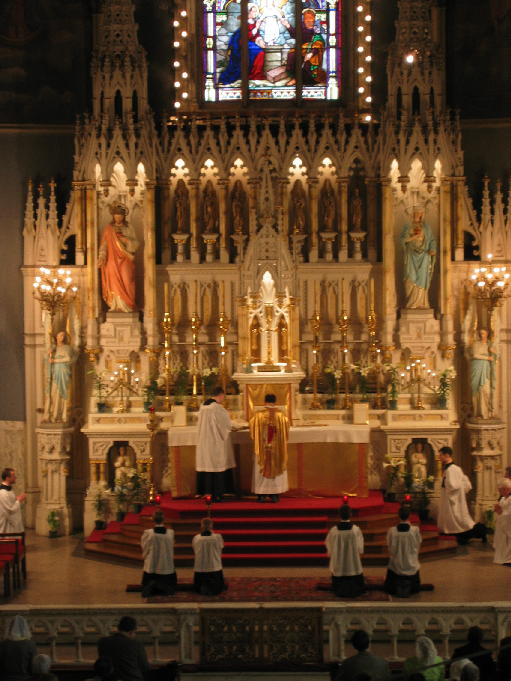
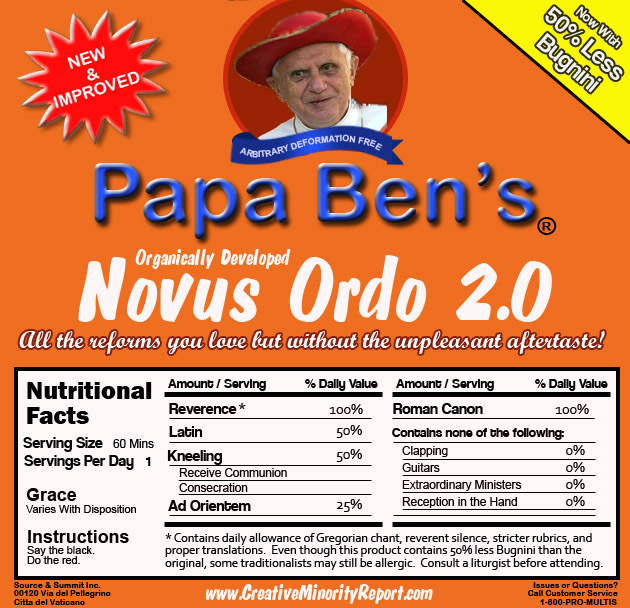
Which mass would you rather attend?

This:


Or This:


This:


Or this:


This:


Or this:


A year later

In observance of Pope Benedict XVI's Motu Proprio Summorum Pontificum's one year anniversary, I posted an interview with Father Zuhlsdorf here and here. On his own blog he asked folks to share their experiences, good or bad in relation to the release of the MP.

I refrained from speaking about the Diocese of Scranton on Father Z's blog and on my own, out of fear I would sound negative.

I don't like giving in to fear.

My appraisal: The Diocese of Scranton has done nothing.

Shortly after the release of the MP I spoke with William Genello PR guy for the diocese and editor in chief of the diocese's own newspaper, The Catholic Light. He was very stand-offish on what the Diocese's reaction would be. He said he was preparing an article for the next issue of the Light, but declined to elaborate.

The article he was preparing turned out to be from the ultra-leftist National Catholic Register, so I don't really know what he was "preparing".

But let's look at the last year, shall we?

Reverend William Langan of St. Joseph's Church Nanticoke has offered the Extraordinary Form of the Mass on 3 or 4 occasions.

At the Oblates of Saint Joseph Seminary, they routinely offer the EF on Sundays at 10am.

Baby steps.

Does anyone else have anything to add to this? I haven't heard of any other new EF's in the Diocese.

Have you?

Let me know.

So far Bishop Martino has not issued a statement on the MP. The Diocese has not issued a statement on the MP. Odd for a Bishop or Diocese to not issue a statement on something so important.

Maybe they hope it will go away.

But it wont.

I'll have more on this, true believers. Stay tuned.

Is your priest on "The List"?

Yesterday the diocese announced 46 new clergy appointments. These changes are being made, I believe, to facilitate the closing of several churches throughout the diocese. It's easier to replace Father James McGahagan, who's been at Exaltation of the Holy Cross for 19 years, than ask him to close it.

So if your pastor was affected by yesterdays move, and you belong to a "parish community" that has more than one church, you can have a 50/50 to guess which one (or more) is closing.

My money is on St. Boniface in Wilkes-Barre to close. Keep an eye for that.

His Excellency, Bishop Martino, announces the following appointments, effective as noted:

PASTORS EMERITI
Effective July 9, 2008

Reverend Mark J. Bochinski, from Pastor, Church of Saints Peter and Paul, Avoca, to Pastor Emeritus, Church of Saints Peter and Paul, Avoca.

Reverend Joseph M. Brozena, from Pastor, Church of Saint Michael, Old Forge, to Pastor Emeritus, Church of Saint Michael, Old Forge.

Monsignor Francis J. Castellano, from Pastor, Church of Mater Dolorosa, Williamsport, to Pastor Emeritus, Church of Mater Dolorosa, Williamsport.

Reverend William J. Flynn, S.S., from Pastor, Church of Corpus Christi, Montdale, to Pastor Emeritus, Church of Corpus Christi, Montdale.

PASTORS AND ADMINISTRATORS
Effective July 9, 2008

Monsignor David A. Bohr, from Sabbatical to Pastor, Cathedral of Saint Peter, Scranton.

Reverend Michael M. Bryant, from Sabbatical to Administrator, Church of the Nativity of Our Lord, Scranton.

Reverend Joseph R. Kakareka, from Pastor, Churches of Saint Mary, Our Lady of Perpetual Help, Mocanaqua, and Ascension of the Lord, Mocanaqua, and Saint Martha, Fairmount Springs, to Administrator, Church of Saints Peter and Paul, Avoca.

Reverend Louis T. Kaminski, to Administrator, Church of Saint Michael, Old Forge. Father Kaminski continues as Pastor of the Churches of Saint Mary, Old Forge, and Saint Lawrence O’Toole, Old Forge.

Reverend Shane L. Kirby, from Secretary to the Bishop of Scranton to Administrator, Churches of Saint Luke, Jersey Shore, and Immaculate Conception, Bastress.

Reverend Stephen A. Krawontka, from Assistant Pastor, Churches of Saint Joseph, Hazleton, and Saint Stanislaus, Hazleton, to Administrator, Churches of Saint Mary, Our Lady of Perpetual Help, Mocanaqua, and Ascension of the Lord, Mocanaqua, and Saint Martha, Fairmount Springs.

Reverend James E. McGahagan, from Pastor, Church of the Exaltation of the Holy Cross, Hanover Township, to Administrator, Churches of Saint Patrick, Wilkes-Barre, and Saint Boniface, Wilkes-Barre.

Reverend Edward L. Michelini, from Assistant Pastor, Church of Saint John the Evangelist, Pittston, to Administrator, Church of Mater Dolorosa, Williamsport, and Chaplain, Saint John Neumann Regional Academy, Williamsport.

Reverend W. Jeffrey Paulish, from Assistant Pastor, Churches of Saint Mary, Old Forge, and Saint Lawrence O’Toole, Old Forge, to Administrator, Church of Saint Elizabeth, Bear Creek.

Reverend Gregory W. Pendergraft, F.S.S.P., The Priestly Fraternity of Saint Peter, to Pastor, Church of Saint Michael, Scranton, effective July 1, 2008.

Reverend Paul Lourduraj Pudhota, from Assistant Pastor, Churches of Saint Peter, Wellsboro, and Saint John Neumann, Blossburg, to Administrator, Church of the Exaltation of the Holy Cross, Hanover Township.

Reverend James B. Shimsky, from Assistant Pastor, Church of Saint Frances X. Cabrini, Carverton, to Administrator, Church of Saint Frances X. Cabrini, Carverton.

Reverend Daniel A. Toomey, from Pastor, Church of Saint Frances X. Cabrini, Carverton, and Chaplain, Misericordia University, Dallas, to Administrator, Church of Corpus Christi, Montdale.

Reverend Jeffrey J. Walsh, V.E., from Episcopal Vicar, Eastern Pastoral Region, to Administrator, Church of Saint Rita, Gouldsboro. Father Walsh will take up further studies in the fall.

ASSISTANT PASTORS
Effective July 9, 2008

Reverend David W. Bechtel, to Assistant Pastor, Church of Saint Matthew, East Stroudsburg.

Reverend Balaraj V. Chencetty, Diocese of Nellore, India, to Assistant Pastor, Church of Saint Patrick, Scranton.

Reverend Dennis Gordon, F.S.S.P., The Priestly Fraternity of Saint Peter, to Assistant Pastor, Church of Saint Michael, Scranton, effective July 1, 2008.

Reverend Victor Leon, O.S.J., Oblates of Saint Joseph, to Assistant Pastor, Church of the Nativity of Our Lord, Scranton. Father Leon will reside at Saint Joseph Oblate Seminary, Pittston.

Reverend Michael S. McCormick, from Assistant Pastor, Church of the Nativity of Our Lord, Scranton, to Assistant Pastor, Churches of Saint Joseph, Hazleton, and Saint Stanislaus, Hazleton.

Reverend Connell A. McHugh, from Chaplain, Holy Redeemer High School, Wilkes-Barre, to Assistant Pastor, Churches of Saint John Bosco, Conyngham, and Good Shepherd, Drums.

Reverend Gregory A. Reichlen, to Assistant Pastor, Churches of Saint Thomas Aquinas, Archbald, and Saint Mary of Czestochowa, Eynon.

Reverend Arbogaste Satoun, from Chaplain, Marywood University, Scranton, to Assistant Pastor, Churches of the Immaculate Conception, West Pittston, and Holy Redeemer, Harding/Falls.

Reverend John J. Victoria, to Assistant Pastor, Churches of the Immaculate Conception, Scranton, and Christ the King, Dunmore.

Reverend Bryan B. Wright, from Chaplain, Notre Dame High School, East Stroudsburg, to Assistant Pastor, Churches of Saint Peter, Wellsboro, and Saint John Neumann, Blossburg.

SPECIAL ASSIGNMENTS

Reverend James J. Alco, from Assistant Pastor, Churches of the Sacred Heart-Saint John, Wilkes-Barre, and Saint Stanislaus Kostka, Wilkes-Barre, to Residence, Saint Joseph Oblate Seminary, Pittston, for reasons of health.

Reverend Albert Bellantonio, from Assistant Pastor, Churches of Saint Ann, Tobyhanna, and Saint Matthew, East Stroudsburg, to Assistant to the Coordinator of Hispanic Ministry for Monroe County.

Monsignor John A. Bergamo, to Chaplain, Notre Dame Elementary, Middle and High Schools, East Stroudsburg. Monsignor Bergamo will continue as Pastor, Church of Saint Matthew, East Stroudsburg, and Judicial Vicar of the Diocesan Tribunal.

Reverend Eric L. Bergman, to Chaplain, Holy Cross High School, Dunmore. Father Bergman will remain Chaplain of the Saint Thomas More Society of Saint Clare Church, Scranton.

Reverend David R. Betts, from Leave of Absence for reasons of health, to Residence, Churches of Sacred Heart-Saint John, Wilkes-Barre, and Saint Stanislaus Kostka, Wilkes-Barre.

Reverend Brian J. T. Clarke, from Assistant Pastor, Churches of Saint Thomas Aquinas, Archbald, and Saint Mary of Czestochowa, Eynon, to Chaplain, Holy Redeemer High School, Wilkes-Barre. Father Clarke will reside at Saint Ignatius Rectory, Kingston.

Reverend Brian J. W. Clarke, to Vice Chancellor, Diocese of Scranton, effective June 30, 2008. Father Clarke will reside at Sacred Hearts of Jesus and Mary Rectory, Scranton, and will continue graduate studies in the fall.

Reverend Charles P. Connor, from Pastor, Cathedral of Saint Peter, Scranton, to further studies. (Probably the smartest priest in the diocese. He should be in a parish, not going to college in Washington DC to learn about marriage and family.)

Monsignor Michael J. Delaney, from Leave of Absence for reasons of health, to Residence, Church of Saint John the Evangelist, Pittston.

Reverend Anthony J. Generose, to Assistant Judicial Vicar and Assistant Vicar for Consecrated Life, Diocese of Scranton, effective June 30, 2008. Father Generose will reside at Visitation of the Blessed Virgin Mary Rectory, Dickson City, and will continue graduate studies in the fall.

Monsignor Joseph P. Kelly, to Episcopal Vicar for Hispanic Ministry. Monsignor Kelly will continue as Executive Director of Catholic Social Services and Administrator, Church of the Holy Rosary, Wilkes-Barre. (Was there one before, does anyone know? If anyone should have that job, it's probably Kelly. He has probably the largest Hispanic population in his section of the town and they all go there.)

Reverend Joseph R. Kopacz, V.G., to Chaplain, Monsignor McHugh Elementary School, Cresco, and Coordinator of Hispanic Ministry, Monroe County. Father Kopacz will continue as Pastor, Church of Saint Mary of the Mount, Mount Pocono.

Reverend Leo J. McKernan, from Pastor, Church of Saint Elizabeth, Bear Creek, to Diocesan Preacher for Called to Holiness and Mission. Father McKernan will reside at Saint Leo Rectory, Ashley. (I think this is a new positon. I'll need to find out what this job is all about.)

Reverend Thomas J. Petro, from Pastor, Churches of Saint Luke, Jersey Shore, and Immaculate Conception, Bastress, to further studies. (I wonder what he is studying)

Reverend Andrew R. Sinnott, from Pastor, Churches of Saint Patrick, Wilkes-Barre, and Saint Boniface, Wilkes-Barre, to Episcopal Vicar, Eastern Pastoral Region. Father Sinnott will reside at Saint Mary of the Mount Rectory, Mount Pocono.

Reverend Brian F. Van Fossen, from Chaplain, Saint John Neumann Regional Academy, Williamsport, to Chaplain, Marywood University, Scranton. Father Van Fossen will reside at Saint Mary of Mount Carmel Rectory, Dunmore.

Reverend Christopher T. Washington, from Assistant Pastor, Church of Saint Matthew, East Stroudsburg, to Secretary to the Bishop of Scranton, and Assistant Director for Worship. Father Washington will reside at Saint Peter’s Cathedral Rectory, Scranton.

Reverend Donald J. Williams, from Residence, Church of the Sacred Heart of Jesus, Forest City, to Chaplain, Misericordia University, Dallas. Father Williams will reside at Saint Frances X. Cabrini Rectory, Carverton.


FSSP seems to have two new priests: Father Gregory F. Pendergraft, and his assistant is Father Dennis Gordon at Saint Michaels, Scranton. St. Michaels incedently, is a very nice little parish on Jackson St. Very traditional as you'd expect FSSP to be, big families, nice parish life, go by and check it out. Their website hasn't been updated in some time, but click here to go there.